
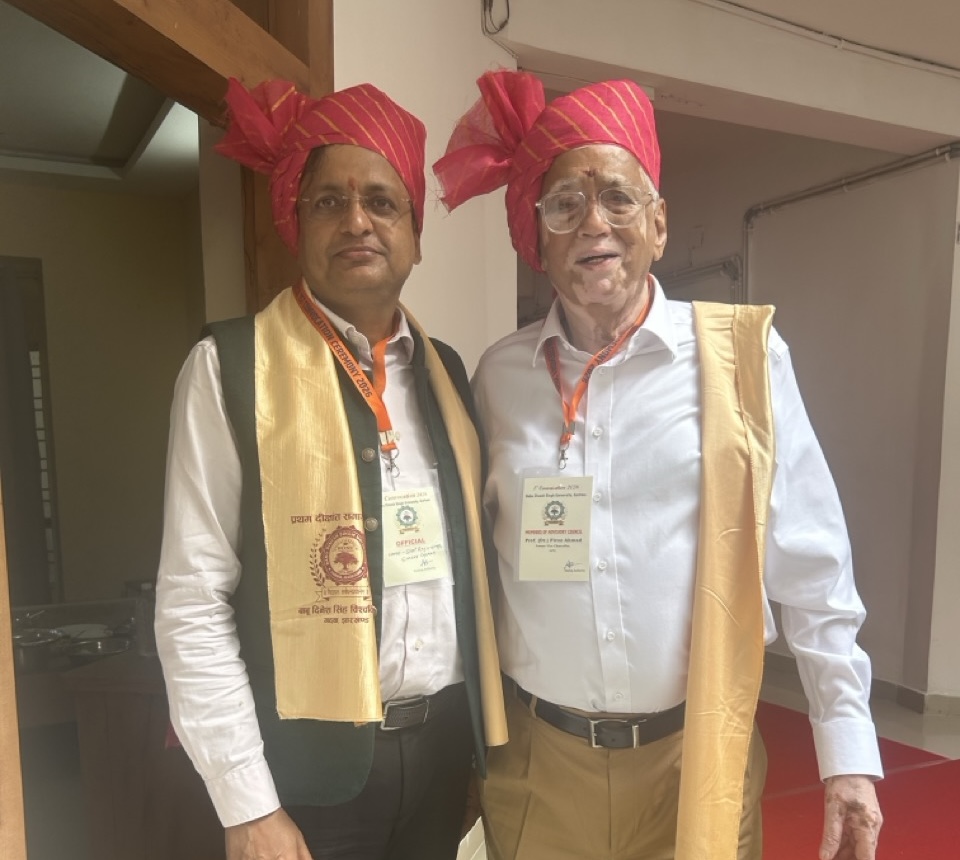
A discussion between Rajeev Singh and renowned academician and Zoology expert Professor (Dr.) M. Firoz Ahmad explored how scientific fish farming, integrated agriculture and farmer awareness could create new livelihood and entrepreneurship opportunities in Jharkhand.
Agriculture in Jharkhand has opportunities that extend beyond conventional crop cultivation. Fish farming and other allied agricultural activities can become important components of a diversified rural economy when supported by scientific knowledge, appropriate practices, farmer training and stronger connections between experts and rural communities.
With this broader perspective, Rajeev Singh, Founder and Managing Director of Sansar Green, held an insightful interaction with Professor (Dr.) M. Firoz Ahmad, former Vice-Chancellor of Nilamber-Pitamber University and an expert in Zoology, focusing on the potential of fish farming and fisheries-based livelihoods in Jharkhand.
The discussion looked at fisheries not merely as an isolated agricultural activity, but as part of a wider approach towards farmer income diversification, rural entrepreneurship and sustainable livelihood development.
Fish Farming as an Additional Livelihood Opportunity
For many rural families, dependence on a single agricultural activity can limit income opportunities and increase vulnerability to changing agricultural conditions.
Diversification into suitable allied activities can provide farmers with additional livelihood options.
During their interaction, Rajeev Singh and Prof. Ahmad exchanged views on how scientific knowledge, appropriate fish-farming practices and greater farmer awareness could support the development of fisheries in suitable areas of Jharkhand.
The discussion highlighted the importance of looking beyond conventional farming models and helping farmers understand opportunities available in allied agricultural sectors.
Where local resources and conditions are appropriate, fish farming could be explored alongside existing agricultural activities rather than as a replacement for traditional crop cultivation.
This approach could allow farmers to gradually diversify their economic activities while continuing with their existing farming systems.
Bringing Scientific Expertise Closer to Farmers
A central theme of the interaction was the importance of bridging the gap between academic expertise and field-level implementation.
Prof. Ahmad’s academic background in Zoology brought a scientific perspective to the discussion, while Singh emphasised the importance of translating specialist knowledge into practical opportunities that farmers can understand and evaluate.
Universities, researchers and subject experts possess considerable scientific knowledge. However, its wider social and economic impact depends on how effectively that knowledge reaches rural communities.
Farmer-oriented awareness programmes, technical interactions, demonstrations and training can help translate scientific understanding into better-informed decisions at the grassroots level.
For Singh, this connection between experts and farmers becomes particularly important when introducing or expanding activities requiring specialised knowledge and technical guidance.
Rather than simply encouraging farmers to adopt a new activity, the emphasis should be on helping them understand its requirements, opportunities and practical challenges.
Moving Towards Integrated Farming and Livelihoods
Rajeev Singh emphasised during the discussion that the future of agricultural development should increasingly be viewed through an integrated livelihood approach.
Instead of considering agriculture only in terms of individual crops, rural development can explore appropriate combinations of crop cultivation, horticulture, fisheries and other allied agricultural activities, depending upon local conditions and available resources.
Such an approach places the farmer’s overall livelihood at the centre of agricultural development.
The objective is not merely to increase production from one activity but to explore multiple sustainable economic opportunities capable of strengthening rural households.
For example, where appropriate water resources and farming conditions exist, fisheries could potentially become one component of a broader agricultural livelihood system.
This type of integration could also encourage farmers to view their farms as diversified economic enterprises rather than depending entirely on a single source of agricultural income.
Creating Opportunities for Rural Youth
The conversation also extended to the potential role of rural youth and agricultural entrepreneurship.
Fish farming need not be viewed only as a supplementary activity for existing farmers. With appropriate technical understanding, training and enterprise development, fisheries and allied sectors can also be explored as entrepreneurial opportunities for young people interested in building livelihoods within the rural economy.
This is particularly relevant to the broader challenge of making agriculture and allied sectors attractive to a new generation.
Combining scientific knowledge with entrepreneurship can encourage young people to see agriculture not merely as a traditional occupation but as an area in which modern enterprises and locally relevant business models can emerge.
The fisheries ecosystem can potentially involve activities beyond fish production itself, including technical services, farm inputs, value addition and market linkages.
Developing awareness of this broader ecosystem could help create a new generation of rural entrepreneurs connected to agriculture and allied sectors.
Connecting Experts, Institutions and Rural Communities
The interaction between Rajeev Singh and Prof. Ahmad also reflected a larger principle: sustainable rural development requires collaboration.
Academic institutions and subject experts can contribute research, scientific understanding and technical guidance. Agricultural enterprises can help connect knowledge with field-level requirements and implementation. Farmers contribute invaluable practical experience and understanding of local conditions.
Government institutions and development agencies can also have important roles where appropriate.
Bringing these stakeholders together can help ensure that interventions are not developed in isolation from the communities expected to benefit from them.
Singh believes that creating stronger connections among academic institutions, scientific experts, entrepreneurs and farmers can play an important role in identifying opportunities suited to Jharkhand’s diverse rural conditions.
The objective should be to create a two-way flow of knowledge—scientific expertise reaching farmers while farmers’ field-level experiences and challenges reach experts.
Beyond Crop Productivity
For Rajeev Singh, the discussion on fish farming formed part of a much broader vision for agriculture and rural development in Jharkhand.
Agricultural progress cannot be measured only by how much a particular crop produces.
It should also be assessed by whether farming communities have access to knowledge, skills, diversified income opportunities, entrepreneurship and sustainable livelihoods.
This means looking beyond individual interventions and considering the rural economy as an interconnected ecosystem.
Crop cultivation will remain central to agriculture, but horticulture, fisheries and other allied activities can potentially complement it wherever conditions are appropriate.
Such diversification can also encourage a broader conversation about how rural resources can be used productively while keeping farmers’ economic interests at the centre.
From Discussion to Action: Practical Next Steps
The interaction between Rajeev Singh and Professor (Dr.) M. Firoz Ahmad also pointed towards the importance of taking the conversation beyond ideas and exploring practical, field-oriented possibilities for fish farming in Jharkhand.
As a next step, Singh sees value in identifying suitable rural areas where farmers are interested in fisheries and where local conditions could support fish farming or integrated agriculture-fishery models.
Rather than adopting a one-size-fits-all approach, any initiative should begin with an understanding of local water resources, existing farming practices, farmer requirements and economic feasibility.
An initial pathway could involve farmer awareness programmes and direct interaction with fisheries, zoology and agricultural experts. This would allow interested farmers to better understand scientific fish farming, pond management, appropriate production practices and basic enterprise planning.
Training should precede large-scale adoption.
Another practical possibility would be to explore a small demonstration or pilot model with interested farmers. A pilot could help stakeholders understand field-level challenges, farmer response, technical requirements and livelihood potential before considering expansion.
Such an approach would allow future decisions to be based on practical experience rather than assumptions.
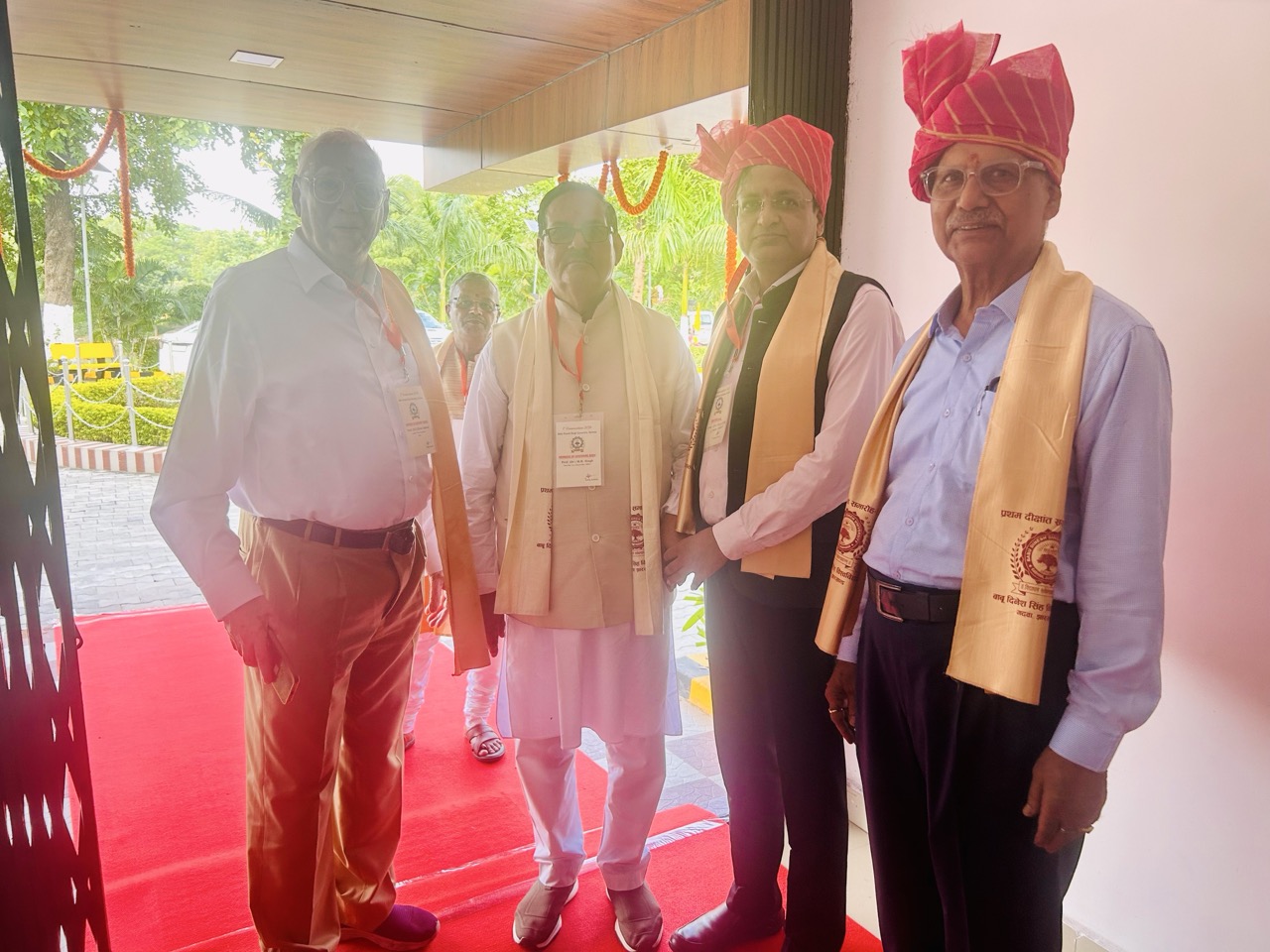
Building a Collaborative Model
Any future initiative could also explore collaboration among subject experts, academic institutions, agricultural enterprises, relevant government departments and farming communities.
Each stakeholder can contribute a different capability.
Academic experts can provide scientific guidance. Institutions can support knowledge dissemination and training. Enterprises can contribute implementation experience and market orientation. Farmers can provide the local knowledge and field experience necessary to ensure that solutions remain practical.
For rural youth, dedicated orientation around fisheries entrepreneurship and allied business opportunities could further broaden the impact.
The objective would be to help young people understand that fisheries can involve opportunities across a wider value chain rather than production alone.
A practical development pathway could therefore progress through:
Expert consultation → identification of suitable areas and interested farmers → awareness and training → pilot demonstration → evaluation → potential expansion.
The emphasis should remain on developing solutions suited to Jharkhand’s local conditions rather than simply replicating models developed elsewhere.
Creating a Demonstrable Ground-Level Model
Rajeev Singh believes that the most meaningful outcome of discussions around rural development is their eventual translation into something that can be demonstrated and evaluated at the grassroots level.
A carefully designed pilot involving farmers, experts and institutional partners could provide an opportunity to understand whether an integrated fisheries model can deliver practical livelihood benefits under local conditions.
The lessons generated through such a demonstration could then help determine whether the model should be refined, expanded or adapted for other areas.
This approach also reduces the gap between policy-level or academic conversations and the everyday realities faced by farmers.
If successfully developed and validated, such initiatives could contribute to the larger objective of helping farmers diversify their livelihoods while creating new opportunities for scientific agriculture, fisheries-based entrepreneurship and rural employment in Jharkhand.
A Broader Vision for Jharkhand’s Rural Economy
The interaction with Professor (Dr.) M. Firoz Ahmad reinforced the importance of bringing specialist knowledge into conversations about the future of rural Jharkhand.
Fish farming represents one area where science, agriculture, entrepreneurship and livelihood development can intersect.
The next step is to move such conversations progressively closer to farmers—understanding local conditions, identifying suitable opportunities, creating awareness and connecting interested communities with appropriate expertise.
For Rajeev Singh, the larger objective remains clear: Jharkhand’s agricultural progress should create not only greater productivity, but also more opportunities for its people.
By connecting conventional agriculture with allied activities such as fisheries, strengthening farmer access to scientific expertise and encouraging rural entrepreneurship, Jharkhand can work towards an agricultural ecosystem that is more diversified, knowledge-driven, entrepreneurial and livelihood-oriented.
The discussion between Rajeev Singh and Professor (Dr.) M. Firoz Ahmad represents one contribution to that larger vision—an agricultural future in which scientific knowledge reaches the grassroots, farmers have access to new livelihood possibilities, and rural youth can discover new pathways to entrepreneurship within their own communities.