
From institutional leadership to agricultural experts, discussions at Garhwa University focused on connecting scientific knowledge, farmer needs, sustainable agriculture and rural entrepreneurship for a stronger agricultural ecosystem in Jharkhand.
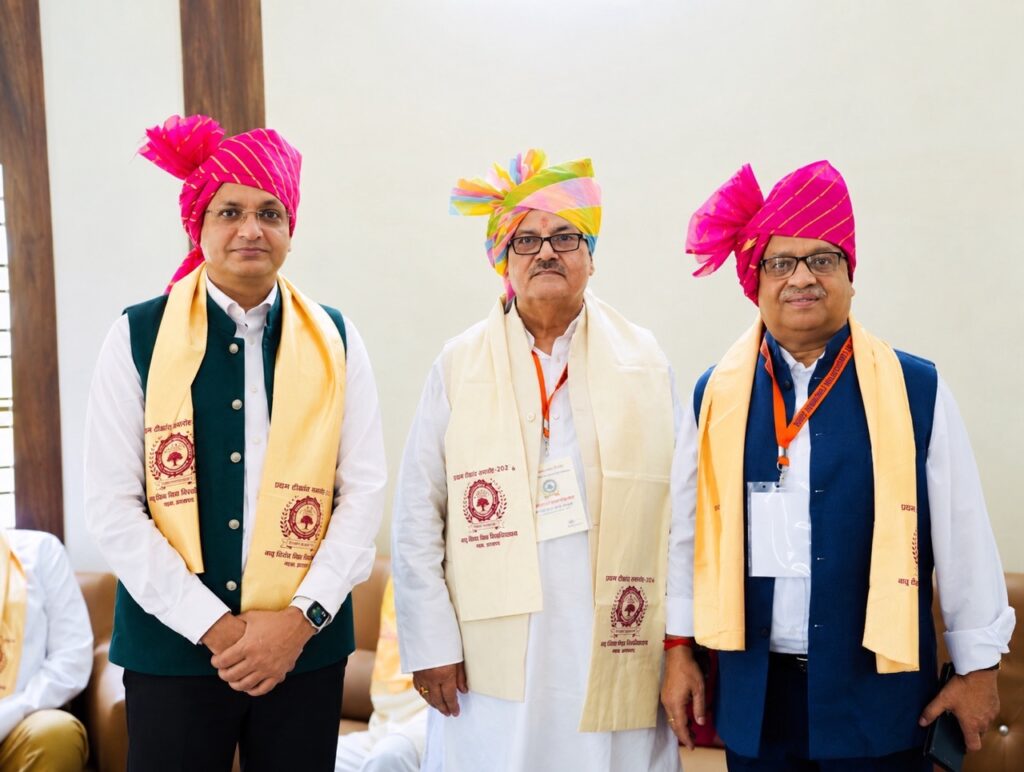
Rajeev Singh, Founder and Managing Director of Sansar Green, held meaningful discussions with the leadership and agriculture experts of Babu Dinesh Singh University, Garhwa, on strengthening agriculture, farmer engagement and the application of scientific knowledge at the grassroots level in Jharkhand.
The interactions took place during Singh’s visit to the university for its First Convocation, where he participated as an Industry Expert alongside university leadership, senior academicians and distinguished guests.
Beyond the formal convocation programme, Singh used the occasion to exchange ideas on how universities, agricultural experts, entrepreneurs and farmers can work more closely together to address the changing needs of agriculture in Jharkhand.
Discussion with Vice-Chancellor Dr M. K. Singh
During his interaction with Vice-Chancellor Dr M. K. Singh, Rajeev Singh discussed the importance of creating stronger connections between academic institutions and the agricultural ecosystem.
The conversation centred on the larger role universities can play beyond classroom education—particularly through knowledge sharing, farmer-oriented initiatives, skill development and interaction with industry and rural communities.
Singh emphasised the importance of taking knowledge and expertise available within academic institutions closer to the people who can benefit from it on the ground.
For an agriculture-oriented state like Jharkhand, closer engagement among universities, farmers and enterprises can help create an ecosystem where education and scientific knowledge contribute more directly to rural development.
The interaction also reflected a shared interest in encouraging young people to view agriculture not only as a traditional occupation but also as an area of innovation, skills and entrepreneurship.
Separate Interaction with the Agriculture Team
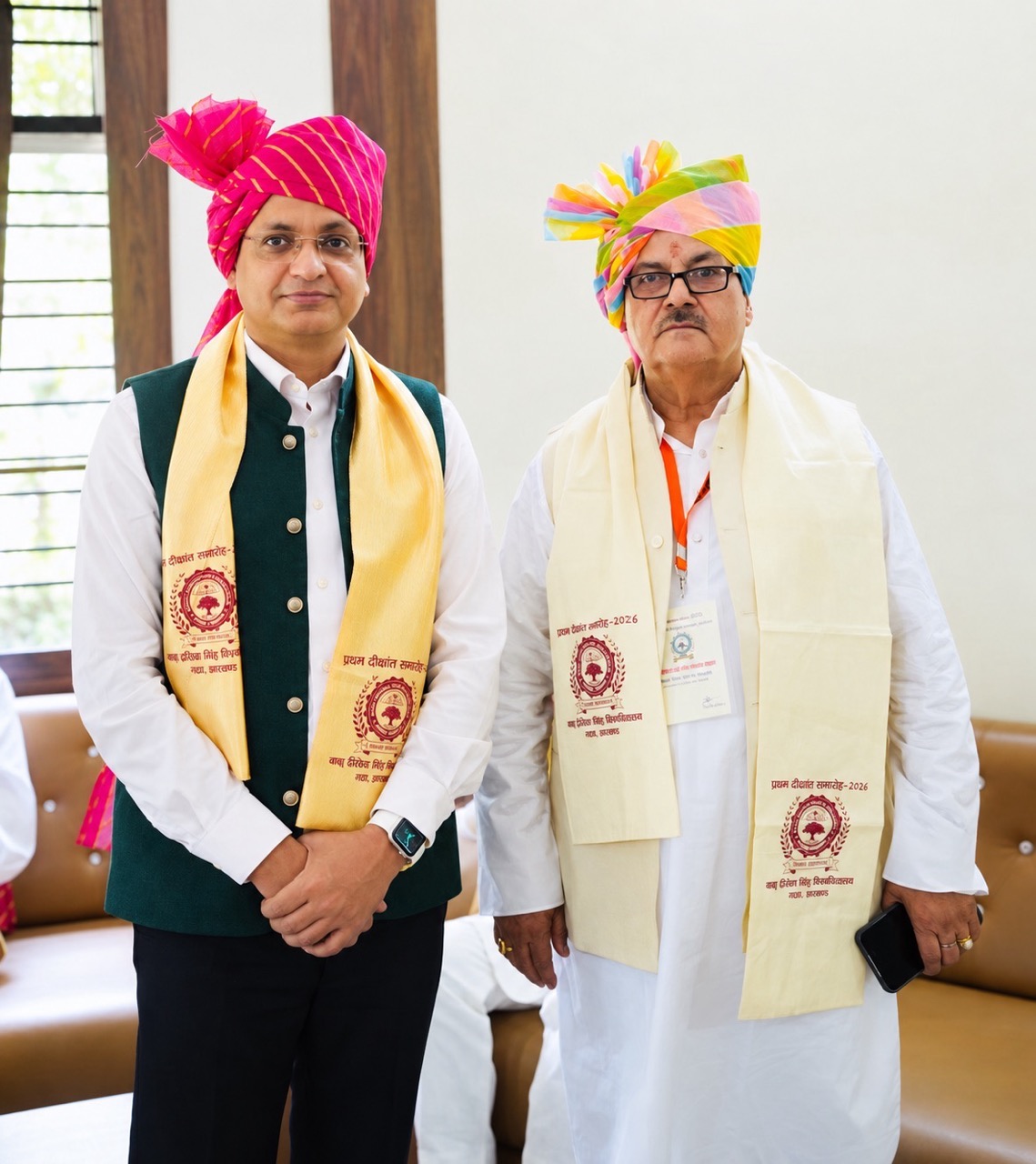
Alongside his discussion with the Vice-Chancellor, Rajeev Singh held a focused interaction with academicians and experts associated with agriculture at the university.
This discussion moved specifically towards the challenges and opportunities facing farmers.
The interaction covered important areas including soil health, crop management, sustainable farming, biological and microbial-based agricultural technologies, farmer training, skill development and agricultural entrepreneurship.
Particular attention was given to the possibility of connecting the scientific and technical expertise available within universities with the practical problems farmers experience in their fields.
Taking Agricultural Knowledge from Campus to Farm
One of the central ideas emerging from the interaction was simple: agricultural research creates greater value when it becomes accessible and useful to farmers.
Rajeev Singh highlighted the need for a stronger mechanism through which farmers can interact with agricultural experts, understand emerging technologies and receive guidance relevant to local soil, crops and farming conditions.
At the same time, farmers possess valuable field-level experience. Their challenges and observations can provide universities and researchers with important insights into the actual conditions under which agricultural technologies must perform.
This two-way exchange can help bridge the gap between research and field application.
“The real value of agricultural knowledge and technology developed in universities is realised when it reaches the field and the farmer. Our effort should be to build stronger connections between agricultural experts and farming communities.”
A Stronger Agricultural Ecosystem for Jharkhand
The discussions also highlighted the potential of combining academic expertise, scientific agriculture, industry participation and farmers’ practical experience.
For Jharkhand, such an approach can be particularly relevant in areas such as soil improvement, sustainable agriculture, biological inputs, farmer capacity building and agricultural entrepreneurship.
Rather than treating these areas separately, Singh’s approach is to view them as parts of a connected agricultural ecosystem.
Universities can contribute research and expertise. Industry and agricultural enterprises can help translate knowledge into scalable field-level applications. Farmers can provide practical feedback and local experience. Young people can bring entrepreneurship and innovation into the sector.
When these stakeholders work together, agriculture can become more knowledge-driven, sustainable and economically attractive.
Special Focus on Farmers of Giridih
An important part of the agriculture-team discussion was the possibility of extending the benefit of university expertise to farmers in Giridih.
The interaction explored ways through which agricultural knowledge, technical guidance and training opportunities could become more accessible to farmers outside the immediate university ecosystem.
Regular interaction between agricultural experts and farmers could help identify local problems more accurately and create solutions better suited to regional farming conditions.
Farmer training, technical dialogue and knowledge-sharing initiatives were among the areas discussed for taking such engagement forward.
Agriculture, Education and Entrepreneurship Must Work Together
For Rajeev Singh, improving agriculture requires more than introducing individual products or technologies.
It requires building connections among education, research, farmers, technology, skills and entrepreneurship.
His discussions with Vice-Chancellor Dr. M. K. Singh and the university’s agriculture experts reflected this broader vision—creating institutional relationships that can ultimately translate into practical benefits at the grassroots level.
The interaction at Garhwa University therefore represented more than an academic engagement. It opened a conversation about how institutions and agricultural stakeholders can work together towards a common objective: making agriculture in Jharkhand more scientific, sustainable, entrepreneurial and farmer-centric.
For Singh, the direction remains clear—bring institutions closer to farmers, bring scientific knowledge closer to the field, and create opportunities for the next generation to participate in the transformation of Jharkhand’s agricultural economy.