
Rajeev Singh & IIT (ISM) Dhanbad: Turning Green Waste into Soil Wealth through Science and Microbial Technology
For Rajeev Singh, Founder & Director of Sansar Green Mission Private Limited, sustainable agriculture begins with understanding the soil and recognising the value of natural resources that are often treated as waste.
This philosophy is reflected in a proposed initiative involving IIT (ISM) Dhanbad and its incubated startup, Sansar Green Mission Private Limited, to transform dry leaves generated within the IIT (ISM) campus into nutrient- and beneficial microorganism-enriched organic manure.
The initiative brings together green-waste management, soil health, microbial science and circular-economy principles to develop a practical “Waste to Wealth” model.
IIT (ISM) Dhanbad & Sansar Green: From Dry Leaves to Soil Wealth
Large institutional campuses generate significant quantities of dry leaves throughout the year. Instead of viewing these leaves simply as a waste-management challenge, IIT (ISM) Dhanbad and Sansar Green are exploring their productive reuse for improving soil health.
Under the proposed initiative, dry leaves collected from the IIT (ISM) Dhanbad campus will undergo a scientific decomposition process.
The resulting organic material is planned to be enriched with essential nutrients and beneficial microorganisms to develop high-quality organic manure.
The process can be represented as:
Dry Leaves → Scientific Decomposition → Nutrient & Microbial Enrichment → Organic Manure → Improved Soil Health
The objective is not merely composting. The approach seeks to convert locally generated biological waste into a value-added soil resource.
Rajeev Singh’s Focus on Soil Health and Microbial Science
Rajeev Singh brings around two decades of practical experience in landscaping, plantation and plant-related activities to Sansar Green’s approach.
His broader vision focuses on an important principle: long-term plant health depends significantly on the condition of the soil and root zone.
Organic matter, soil structure, moisture, nutrients and beneficial microbial activity are interconnected. By combining decomposed organic material with appropriate nutrients and beneficial microorganisms, the initiative seeks to develop a more comprehensive approach to soil health.
Rather than looking at dry leaves as the end of a plant’s biological cycle, the concept is to return their organic value to the soil.
IIT (ISM) Dhanbad Hosts Discussion on the Proposed Initiative
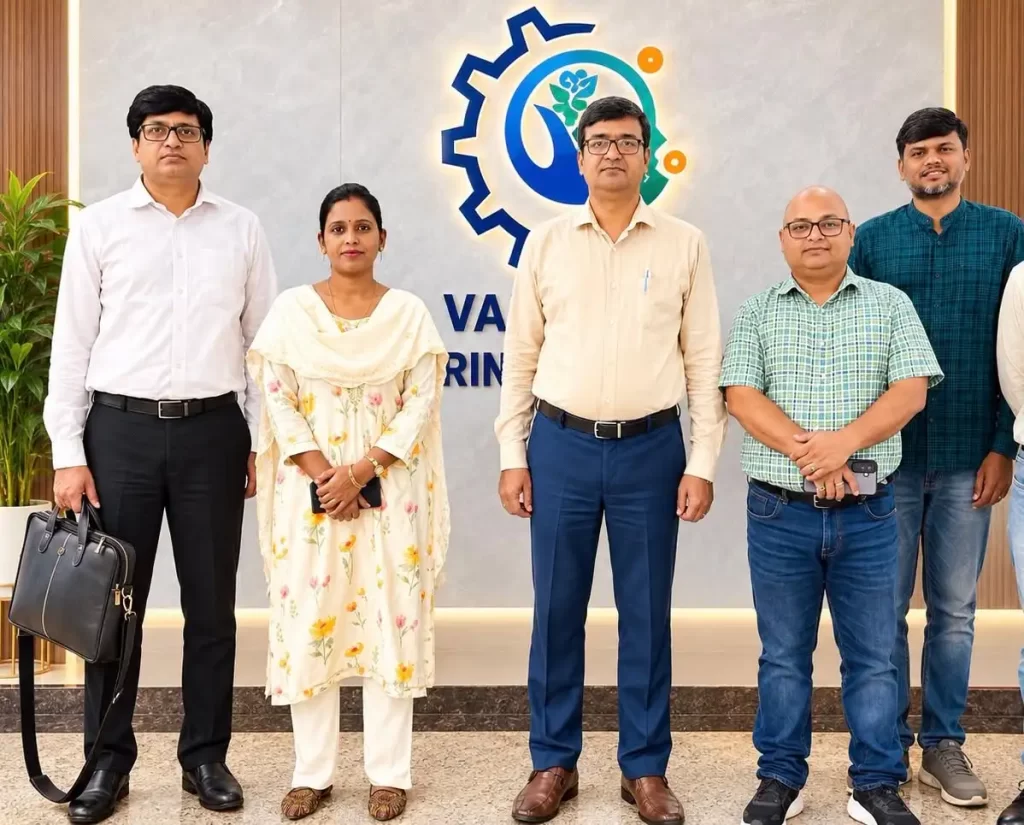
The proposed initiative was discussed by Prof. Alok Kumar Das, Dean, CIIE, IIT (ISM) Dhanbad; Rajeev Singh, Founder & Director, Sansar Green Mission Private Limited; Mrs. Anjana, District Agriculture Officer, Dhanbad; and Mr. Mritunjay Sharma, Assistant Registrar, IIT (ISM) Dhanbad.
The discussion focused on developing a practical framework for processing dry leaves and creating enriched organic manure that can contribute to green-waste management and soil-health improvement.
IIT (ISM) Dhanbad and Sansar Green: A Collaborative Implementation Model
Under the proposed arrangement, Sansar Green Mission Private Limited will undertake the investment required for machinery, equipment, manpower, production and operational activities.
IIT (ISM) Dhanbad will provide the necessary space for establishing the proposed production unit and storing the finished organic manure.
This model combines institutional infrastructure with startup-led investment and implementation, creating an opportunity to demonstrate a practical sustainability solution within a major educational campus.
From the IIT (ISM) Campus to Farmers and the Wider Community
The finished organic manure is planned for use in gardens, nurseries, plantations, landscaping and other green activities within the IIT (ISM) Dhanbad campus.
The initiative also envisages making the manure available to farmers, nursery operators, gardening enthusiasts and the wider community.
This could extend the impact of the initiative beyond campus waste management and demonstrate how locally available biomass can be transformed into a useful resource for soil and plant health.
IIT (ISM) Dhanbad Initiative Supports the “Waste to Wealth” Approach
The concept brings together three closely connected priorities:
Waste to Wealth | Soil Health | Circular Economy
Instead of burning, dumping or treating dry leaves merely as waste, the proposed system seeks to bring their organic matter back into the biological cycle.
Such decentralised processing could also help reduce the need to transport green waste over long distances while creating a useful product close to the point where the waste is generated.
A Model That Could Extend Beyond IIT (ISM) Dhanbad
If successfully implemented, the initiative could provide useful learning for other locations that generate substantial quantities of biodegradable green waste.
Similar approaches could potentially be explored in:
Educational institutions
Government campuses
Industrial and corporate campuses
Residential townships
Large gardens and parks
Urban local bodies
Each location would require an appropriate system based on the quantity and characteristics of available biomass, local soil conditions and intended end use.
Rajeev Singh and Sansar Green’s Larger Vision
For Rajeev Singh and the Sansar Green team, the initiative represents more than producing organic manure from dry leaves.
The broader objective is to demonstrate how soil science, beneficial microorganisms, organic resources and practical technology can work together to address real environmental and agricultural challenges.
It reflects a simple but important idea:
A dry leaf does not necessarily represent the end of a biological cycle. With appropriate scientific intervention, its nutrients and organic matter can return to the soil and contribute to new plant life.
Through its proposed collaboration with IIT (ISM) Dhanbad, Sansar Green aims to demonstrate how locally available biological waste can be transformed into a productive resource for healthier soil and a greener future.
From Waste to Wealth, and Back to the Soil
The future of sustainability does not always depend on discovering new resources. It can also begin with recognising the value of resources already available around us.
By connecting green-waste management with microbial science and soil health, the IIT (ISM) Dhanbad and Sansar Green initiative seeks to demonstrate a circular approach:
Waste becomes a resource.
Organic matter returns to the soil.
Microbial activity supports the biological cycle.
And healthier soil supports new plant life.
That is the larger vision behind turning dry leaves into soil wealth.