
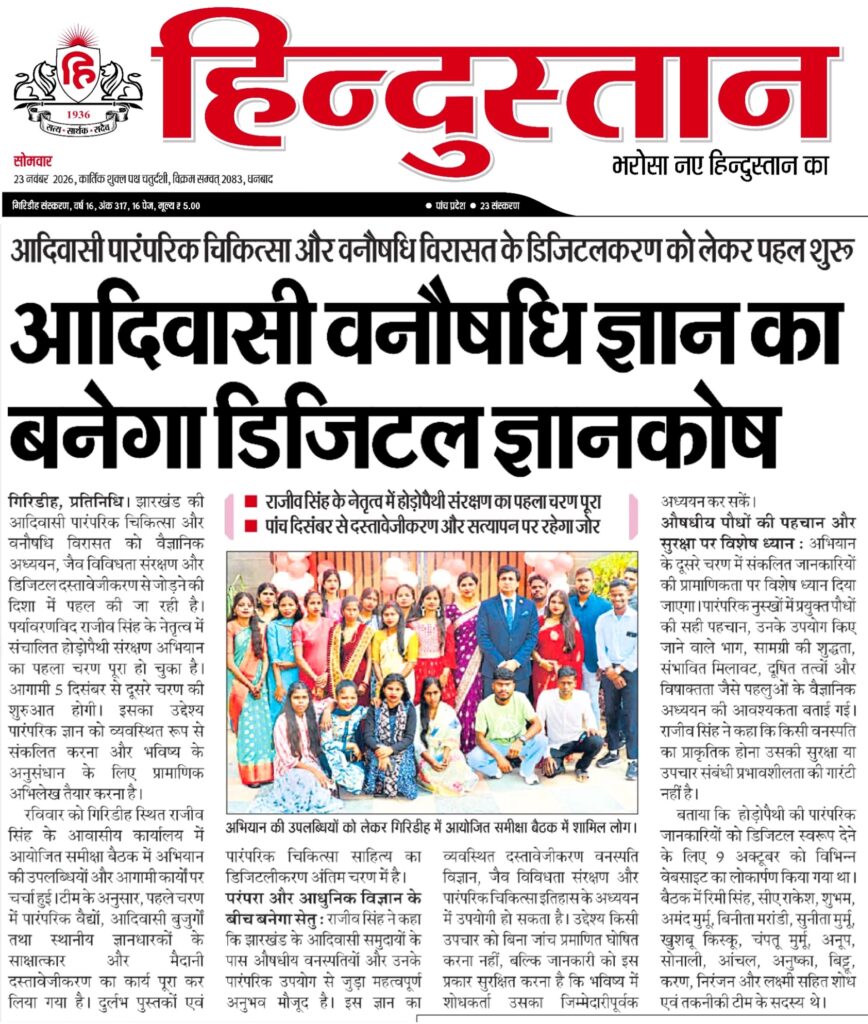
Dainik Hindustan | Giridih, Jharkhand | 23 November 2026
The efforts of environmentalist and agripreneur Rajeev Singh to preserve indigenous knowledge, traditional medicinal plants and biodiversity have received recognition in Dainik Hindustan. His initiative, the Hodopathy Conservation Campaign, is drawing attention to the importance of protecting the traditional plant-based knowledge preserved by Adivasi communities for generations.
The campaign aims to safeguard an important part of India’s indigenous heritage by documenting traditional knowledge, creating awareness about medicinal plants and encouraging the conservation of forests and natural resources.
For generations, Adivasi communities have maintained a close relationship with forests and nature. Their traditional knowledge includes the identification of various plants, their traditional uses and practices associated with local biodiversity. Much of this knowledge has been passed down orally from one generation to another. However, changing lifestyles, environmental degradation and the gradual loss of traditional practices have raised concerns about its preservation.
Recognising this challenge, Rajeev Singh has taken the initiative to develop Hodopathy as a dedicated platform for the conservation and documentation of indigenous knowledge.
Digital Initiative to Preserve Traditional Knowledge
An important milestone in this initiative was achieved on 8 October 2026, when three dedicated websites – Hodopathy.org, Hodopathy.in and Hodopathy.com – were inaugurated in Giridih.
These platforms aim to create a digital space for documenting traditional Adivasi knowledge, highlighting indigenous medicinal plants and connecting with traditional knowledge holders, researchers and environmental organisations.
The initiative also seeks to record the experiences of Adivasi elders and traditional healers with their consent, ensuring that their contributions receive appropriate recognition and respect.
Focus on Forests and Medicinal Plant Conservation
The campaign recognises that preserving traditional knowledge is closely connected with protecting forests and biodiversity. Medicinal plants and indigenous vegetation are important natural resources, and their conservation requires greater community participation and awareness.
Through the Hodopathy Conservation Campaign, efforts are being planned to identify traditional medicinal plants, promote their conservation and encourage younger generations to understand the importance of indigenous biodiversity.
The development of Hodopathy Park in Gandey is also associated with this broader vision of medicinal plant awareness and environmental conservation.
Connecting Indigenous Wisdom with Scientific Research
Another important objective of Rajeev Singh’s initiative is to explore collaboration with agricultural universities, research institutions and botanical experts.
The proposed approach is to combine responsible documentation of traditional knowledge with scientific studies of selected medicinal plants. This will help create opportunities for research while respecting the cultural rights and contributions of the communities that have preserved this knowledge.
The campaign also aims to encourage young people to participate in documentation, awareness programmes and biodiversity conservation activities.
A Long-Term Commitment to Conservation
According to the vision behind the campaign, Hodopathy should grow beyond a documentation initiative and become a wider movement connecting indigenous communities, environmental conservation, education and research.
The first phase of the campaign included the launch of its digital platforms and the establishment of an initial framework for knowledge preservation. The second phase is scheduled to begin on 5 December 2026, with a greater focus on community participation, traditional knowledge documentation and medicinal plant conservation.
Recognising the Value of Indigenous Heritage
The coverage in Dainik Hindustan brings attention to an important