
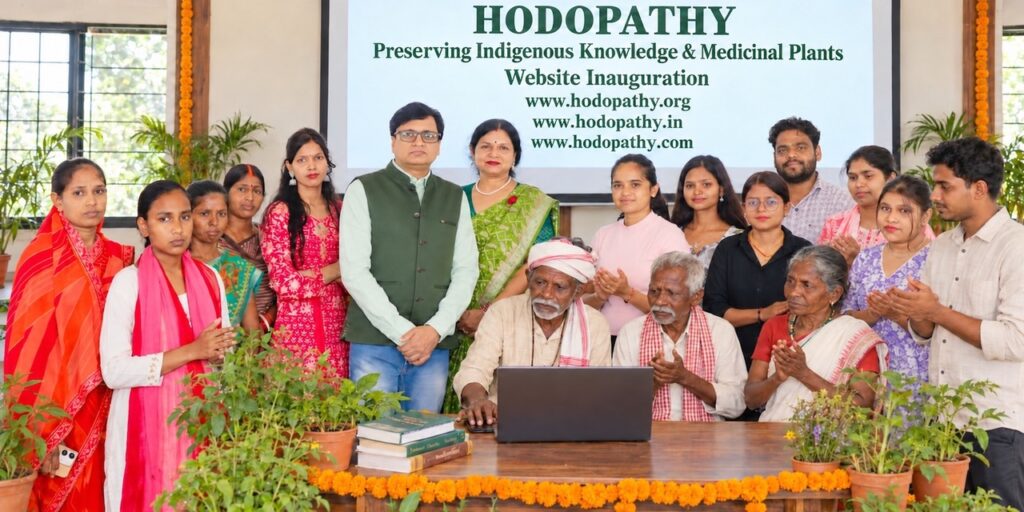
Environmentalist Rajeev Singh inaugurates three dedicated Hodopathy websites in Jharkhand to preserve centuries-old Adivasi knowledge, encourage medicinal plant conservation, protect forest biodiversity and connect indigenous heritage with future generations.
Giridih, Jharkhand | 8 October 2026
A digital initiative dedicated to preserving indigenous knowledge, conserving medicinal plants and promoting biodiversity protection was launched in Giridih, Jharkhand, on 8 October 2026. Environmentalist, agripreneur and sustainability advocate Rajeev Singh inaugurated three websites—Hodopathy.org, Hodopathy.in and Hodopathy.com—to support the documentation, preservation and responsible sharing of traditional knowledge associated with Hodopathy, an indigenous healing tradition practised among Adivasi communities in Jharkhand.
The inauguration was held at Singh’s residential office in Giridih, bringing attention to the need to safeguard traditional ecological knowledge that has been passed down through generations. The initiative aims to connect community knowledge holders, researchers, students, environmental organisations and younger generations through digital learning, conservation awareness and future collaborative activities.
The programme represents an effort to recognise the relationship between indigenous knowledge systems, medicinal plant resources and the protection of natural ecosystems.
Digital Platforms for Preserving Indigenous Knowledge
For centuries, Adivasi communities in Jharkhand have maintained a close relationship with forests and their natural resources. Traditional knowledge relating to medicinal plants, seasonal vegetation, local ecosystems and community-based healing practices has largely been transmitted orally from elders to younger generations.
However, changing lifestyles, environmental degradation, declining forest resources and reduced intergenerational transmission have created challenges for the continuity of this knowledge.
The Hodopathy digital initiative seeks to address these concerns by developing accessible online platforms where traditional knowledge can be documented, organised and preserved with appropriate community participation.
The three websites—**www.hodopathy.org, www.hodopathy.in and www.hodopathy.com**—are intended to provide resources related to indigenous knowledge, medicinal plants, biodiversity conservation, traditional practices and educational activities.
The platforms aim to support the creation of digital records, educational articles, community knowledge collections and information about medicinal plant conservation.
Through these efforts, the initiative seeks to ensure that valuable cultural and ecological knowledge remains accessible to future generations while respecting the rights and contributions of its original custodians.
Medicinal Plant Conservation as a Central Priority
Medicinal plants are an important component of Jharkhand’s biodiversity and traditional ecological heritage. Many native and locally used plant species have long been associated with the cultural practices and traditional knowledge systems of Adivasi communities.
These plants also contribute to the ecological functioning of forests by supporting habitat diversity and natural ecosystem processes.
The Hodopathy initiative places particular emphasis on the identification, documentation, cultivation and conservation of medicinal plant species.
Its proposed activities include creating awareness about locally important plants, encouraging responsible harvesting practices, supporting medicinal plant cultivation and promoting the protection of natural habitats.
Conservation efforts are especially important where plants face pressure from habitat loss, unsustainable collection, land-use changes and declining public awareness.
By encouraging community participation in medicinal plant conservation, the initiative seeks to strengthen the connection between traditional knowledge and practical environmental protection.
The programme also aims to promote the understanding that preserving a medicinal plant species involves protecting the ecological conditions necessary for its continued survival.
Connecting Indigenous Knowledge with Forest Biodiversity Protection
The relationship between traditional knowledge and forest biodiversity forms a central theme of the Hodopathy initiative.
Jharkhand’s forests provide ecological resources that support wildlife, native vegetation, local livelihoods and cultural traditions. For generations, forest-dependent communities have developed detailed knowledge of plants, seasonal changes and natural environments through observation and experience.
This accumulated knowledge can provide useful perspectives for conservation planning, particularly when combined with ecological research and community participation.
The initiative seeks to encourage awareness of forest protection, native plant conservation, biodiversity restoration and sustainable use of natural resources.
It also aims to highlight the importance of conserving habitats where medicinal plants grow naturally.
Through educational programmes and digital information sharing, Hodopathy intends to promote a broader understanding of biodiversity conservation as a shared responsibility involving communities, researchers, institutions and younger generations.
Hodopathy Park in Gandey: A Vision for Practical Conservation
Alongside the digital platforms, the initiative is connected with the proposed development of Hodopathy Park in Gandey, Giridih, focusing on medicinal plant conservation, environmental education and indigenous knowledge preservation.
The park is envisioned as a space where traditional knowledge and practical conservation activities can be brought together.
Its proposed objectives include supporting medicinal plant cultivation, encouraging plant identification activities, creating educational opportunities and promoting awareness of locally significant botanical resources.
The concept also provides scope for future participation by students, traditional knowledge holders, community volunteers and researchers.
By connecting online resources with field-based learning, the initiative seeks to make biodiversity education more practical and accessible.
Hodopathy Park is intended to support the broader goal of protecting indigenous plant resources while encouraging responsible environmental stewardship.
Documenting the Wisdom of Adivasi Elders
One of the most important objectives of the Hodopathy programme is to document the knowledge and experiences of Adivasi elders, traditional healers and community knowledge holders.
Much of this knowledge exists outside formal written records and has been preserved through direct learning and community practice.
The initiative proposes collecting information through interviews, written documentation, photographs, audiovisual recordings and educational publications, subject to informed consent and respect for community rights.
Plans also include preparing a publication that records selected experiences and knowledge associated with traditional healers and indigenous plant practices.
The documentation process is intended to recognise the contributions of knowledge holders while ensuring that culturally sensitive information is handled responsibly.
Protecting indigenous knowledge also requires attention to intellectual property, traditional knowledge rights, community consent and the prevention of unauthorised commercial exploitation.
The Hodopathy initiative therefore seeks to encourage preservation practices that respect the communities responsible for maintaining these traditions.
Encouraging Youth Participation and Environmental Learning
A major challenge in preserving traditional knowledge is ensuring that younger generations remain connected with their cultural and ecological heritage.
The Hodopathy initiative aims to encourage students, young researchers and community volunteers to participate in educational activities related to medicinal plants, indigenous knowledge and biodiversity conservation.
Proposed programmes include medicinal plant identification, conservation awareness, traditional knowledge documentation and community-based learning.
Digital platforms can help introduce young people to these subjects, while practical activities can strengthen their understanding of plants and natural ecosystems.
The initiative also seeks to encourage interaction between experienced community knowledge holders and younger participants, creating opportunities for intergenerational learning.
Such engagement may contribute to the continuity of indigenous knowledge while developing greater awareness of environmental conservation.
Opportunities for Scientific Research and Collaboration
The Hodopathy digital initiative also seeks to encourage responsible scientific investigation of medicinal plants and traditional knowledge.
Potential areas of collaboration include botanical identification, biodiversity documentation, ethnobotanical studies, conservation research and educational programmes involving academic institutions.
The initiative envisages cooperation with universities, research organisations and relevant experts to explore scientific approaches to documenting traditional plant knowledge.
Traditional medicinal practices may provide subjects for scientific investigation, but historical use alone does not establish clinical safety or therapeutic effectiveness. Any health-related claims require appropriate evaluation and regulatory compliance.
By supporting research that respects indigenous communities and scientific standards, the initiative aims to contribute to a more informed understanding of traditional ecological knowledge.
Research collaboration may also help identify conservation priorities and improve documentation of locally significant plant species.
Rajeev Singh’s Commitment to Environmental Conservation
Rajeev Singh, associated with initiatives in plantation, soil health, sustainable agriculture and ecological restoration, has emphasised the importance of preserving traditional knowledge as part of wider environmental conservation efforts.
The Hodopathy initiative reflects a broader approach that connects the protection of natural ecosystems with the cultural heritage of communities that have depended on these ecosystems for generations.
Its objectives extend beyond creating websites to encouraging community engagement, environmental awareness, medicinal plant conservation and responsible research.
The programme seeks to build cooperation among traditional knowledge holders, students, researchers, conservation organisations and interested institutions.
Through this approach, the initiative aims to create opportunities for protecting both biological diversity and the traditional knowledge associated with it.
Building a Long-Term Digital Resource for Biodiversity and Heritage
The inauguration of the three websites marks the beginning of a broader effort to develop digital resources focused on indigenous knowledge preservation and ecological conservation.
Future priorities include expanding educational content, documenting traditional knowledge, encouraging medicinal plant conservation and exploring research partnerships.
The platforms are also intended to support awareness of Jharkhand’s traditional ecological heritage among audiences beyond the state.
Digital documentation can help preserve information that might otherwise become difficult to recover, while conservation programmes can contribute to protecting the plant species and habitats connected with that knowledge.
The initiative seeks to combine these approaches into a long-term framework for learning, preservation and community participation.
A New Chapter for Indigenous Knowledge and Biodiversity Conservation in Jharkhand
The launch of Hodopathy.org, Hodopathy.in and Hodopathy.com on 8 October 2026 represents a step toward integrating traditional knowledge preservation with medicinal plant conservation and biodiversity awareness.
At a time when environmental pressures and social changes threaten both natural ecosystems and the continuity of oral traditions, the initiative highlights the importance of documenting indigenous knowledge and protecting the resources associated with it.
By promoting community participation, educational outreach, responsible research and conservation awareness, Rajeev Singh’s Hodopathy initiative aims to contribute to the protection of Jharkhand’s indigenous heritage and natural biodiversity.
The long-term vision is to develop a living knowledge resource that recognises the contributions of Adivasi communities, encourages younger generations to engage with traditional ecological knowledge and supports the conservation of medicinal plants and forests.
Preserving indigenous knowledge, protecting medicinal plants and conserving biodiversity are interconnected goals. The Hodopathy digital initiative seeks to bring these priorities together for the benefit of future generations.
Initiative Details
Event: Hodopathy Digital Initiative and Three-Website Inauguration
Date: 8 October 2026
Location: Giridih, Jharkhand, India
Initiated by: Rajeev Singh
Focus Areas: Indigenous Knowledge Preservation, Medicinal Plant Conservation, Forest Biodiversity Protection, Environmental Education and Research
Official Websites: